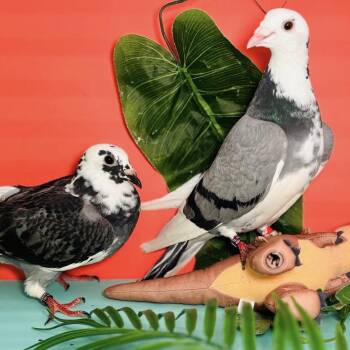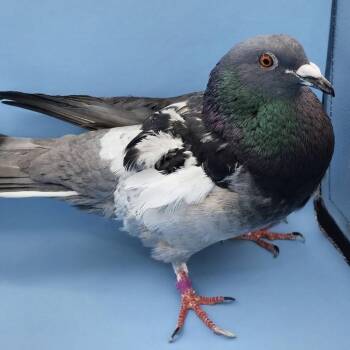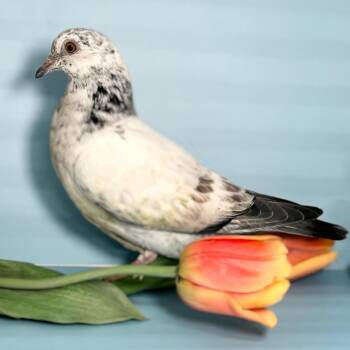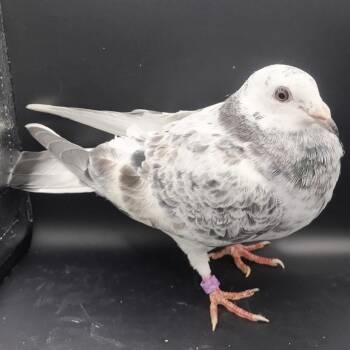
When Butters came to us, she couldn’t hold herself upright. She couldn’t eat. She couldn’t drink. Every single thing a dove does to stay alive, somebody else had to do for her, and that somebody was her foster mom, Joleen, around the clock, for as long as it took. Feeding. Holding. Cleaning. Medicating. The unglamorous work of keeping one small bird going long enough to find out who she’d turn out to be.
Who she turned out to be is stubborn.
Butters eats on her own now. Drinks on her own. Enjoys her seeds and treats with the enthusiasm of a bird who has strong opinions about snacks. Joleen calls her remarkably self-sufficient, and says she amazes her daily with what she’s figured out how to manage.
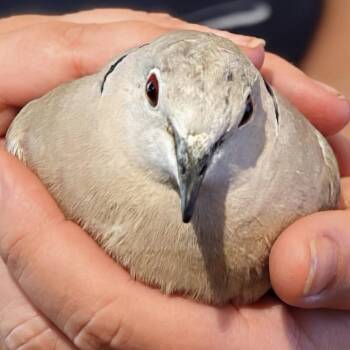
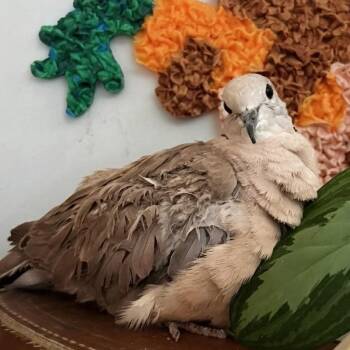
She’s a ringneck dove, dressed in soft grey and warm fawn, with a neat black half-collar at the back of her neck and dark eyes that miss nothing. Her preferred position is settled somewhere cozy, watching whatever the household is up to. She is an excellent supervisor.
The neurotrauma left its mark. Butters doesn’t fly, and she shuffles more than she walks. It’s honestly charming to watch — she has her own gait and she commits to it — but it does shape what she needs. She’s happiest with soft footing like folded blankets or towels, food and water within easy shuffling distance, and nothing that requires her to fly or climb. Ringneck doves are fully domestic and can’t survive outdoors regardless, so she’s an indoor bird for life.
Butters has spent her whole recovery proving she can do things herself. What she’d like now is a household busy enough to be worth watching, and someone willing to have a dove observe them. Adopt her, and let her supervise!
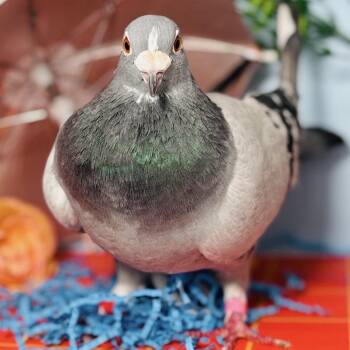
GUAVA MINT
Pigeon
🇺🇸
Chicago, Illinois
female, medium, adult
Pigeon
Chicago, Illinois