
This page provides an overview of ferret breeds to help you understand their differences and choose the right fit for your lifestyle.
Ferret breeds refer to different variations of ferrets that have distinct characteristics such as size, energy levels, and temperament. Choosing the right ferret breed is important as it can greatly impact your experience as a pet owner. In this guide, we will explore the differences between ferret breeds to help you make an informed decision when adopting a ferret.
Select animal and breed you want to learn more about
Ferret Breed Directory: Browse Traits, Care & Adoption Guides
Intro
How Ferret Breeds Differ
Ferret breeds differ in various aspects including size, energy level, temperament, grooming needs, trainability, and health considerations. Understanding these differences is crucial in selecting a ferret that aligns with your lifestyle and preferences. Whether you prefer a small, low-energy pet or a more active and trainable ferret, each breed offers unique qualities to consider.
Choosing The Right Ferret Breed
When choosing the right ferret breed, consider factors such as lifestyle fit, time commitment, suitability for family versus single owners, handling requirements for first-time owners, activity level, and considerations like allergies and shedding. Matching a ferret breed to your specific needs and preferences will ensure a harmonious relationship between you and your pet.
Common Ferret Categories
Ferrets are often categorized based on shared traits such as size, temperament, activity level, living environment suitability, and experience level required for owners. These categories serve as guidelines to help prospective ferret owners narrow down their options before delving into specific breeds or types. It's important to note that while categories provide a general idea, individual ferrets may still exhibit unique characteristics.
Ferret Adoption Considerations
Adopting a ferret is a great option as it gives these furry companions a second chance at a loving home. Understanding how breed traits can influence adoption success is essential when considering to adopt a ferret. Be prepared for the adoption process, ensure responsible ownership practices, and be ready to provide a caring environment for your new ferret family member.
CHINCHILLA
The Chinchilla ferret breed is characterized by its luxurious, soft fur that resembles the velvety coat of a chinchilla, hence its name. These ferrets typically have a silver or gray coloration with darker guard hairs interspersed throughout. They are known for their friendly and social personalities, making them popular pets among ferret enthusiasts. Chinchilla ferrets require regular grooming to maintain their coat's luster and health. With their playful nature and striking appearance, Chinchilla ferrets make delightful companions for experienced ferret owners.
The Chinchilla ferret breed is characterized by its luxurious, soft fur that resembles the velvety coat of a chinchilla, hence its name. These ferrets typically have a silver or gray coloration with darker guard hairs interspersed throughout. They are known for their friendly and social personalities, making them popular pets among ferret enthusiasts. Chinchilla ferrets require regular grooming to maintain their coat's luster and health. With their playful nature and striking appearance, Chinchilla ferrets make delightful companions for experienced ferret owners.
SABLE
The sable ferret is a charming breed known for its distinctive coat color resembling that of a sable marten, ranging from dark chocolate to warm cinnamon hues. With a playful and affectionate nature, sables are popular companions for both families and individuals. These intelligent creatures thrive on interaction and mental stimulation, requiring ample playtime and socialization. Their inquisitive personalities and boundless energy make them delightful pets, promising endless entertainment and companionship for dedicated ferret enthusiasts.
The sable ferret is a charming breed known for its distinctive coat color resembling that of a sable marten, ranging from dark chocolate to warm cinnamon hues. With a playful and affectionate nature, sables are popular companions for both families and individuals. These intelligent creatures thrive on interaction and mental stimulation, requiring ample playtime and socialization. Their inquisitive personalities and boundless energy make them delightful pets, promising endless entertainment and companionship for dedicated ferret enthusiasts.
Questions & Answers
1) Is the ferret a good fit for first-time owners?
Ferrets can be a handful for inexperienced owners due to their high energy levels and specific care needs. They require a dedicated owner willing to invest time and effort into their care.
2) What level of daily care and maintenance does a ferret require?
Ferrets need daily interaction, exercise, a balanced diet, and a clean living environment. Regular grooming and veterinary check-ups are also crucial for their well-being.
3) What health or care considerations are common for ferrets?
Ferrets are prone to health issues like adrenal gland disease, insulinoma, and dental problems. Regular vaccinations, parasite control, and a proper diet are essential preventive measures.
4) What living environment is suitable for a ferret?
Ferrets thrive in spacious cages with room to move and play. They require a secure area free of hazards, with bedding for comfort and enrichment items like toys and tunnels.
5) What is the lifespan of a ferret, and what long-term commitment is required?
Ferrets have an average lifespan of 6-10 years but can live up to 13 years with proper care. Owning a ferret is a long-term commitment that requires financial resources and time dedication.
6) Are ferrets compatible with children or other pets?
Ferrets can get along well with children and other pets when introduced properly and supervised. It's essential to teach children how to handle ferrets gently and to monitor interactions to prevent accidents.
LATEST PET BLOGS
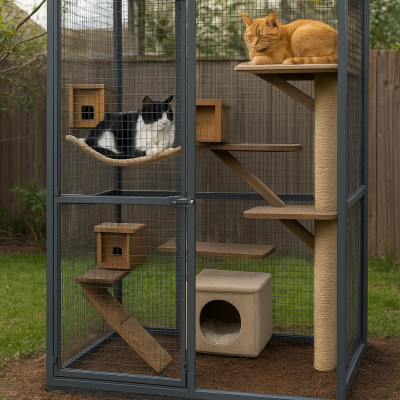
DESIGNING THE PERFECT CATIO: SMALL-SPACE IDEAS FOR ENRICHMENT, SAFETY, AND HAPPY CATS
Create a compact, safe, and enriching catio that protects wildlife and keeps your cat healthy. Learn proven design tips for vertical layouts, escape-proof materials, weatherproofing, enrichment, and multi-cat flow.
Create a compact, safe, and enriching catio that protects wildlife and keeps your cat healthy. Learn proven design tips for vertical layouts, escape-proof materials, weatherproofing, enrichment, and multi-cat flow.

INVISIBLE THREATS: PROTECTING YOUR DOG FROM WILDFIRE SMOKE, POOR AIR, AND EXTREME HEAT
Simple, practical steps to keep your dog safe from wildfire smoke, bad air quality, and extreme heat — monitoring AQI, creating a clean room, cooling tips, and emergency actions.
Simple, practical steps to keep your dog safe from wildfire smoke, bad air quality, and extreme heat — monitoring AQI, creating a clean room, cooling tips, and emergency actions.

AI FOR FELINES: HOW SMART CAMERAS AND LITTER TECH CATCH CAT HEALTH ISSUES EARLY
Learn how smart cameras, AI litterboxes, collars, and water/feeding monitors spot stress, litterbox problems, and early health issues in cats so you can act before an emergency.
Learn how smart cameras, AI litterboxes, collars, and water/feeding monitors spot stress, litterbox problems, and early health issues in cats so you can act before an emergency.

PâTé VS GRAVY VS SHREDS: HOW CAT FOOD TEXTURE AFFECTS HYDRATION, TEETH & TASTE
Learn how pâté, gravy, and shreds affect your cat's water intake, dental health, and food preference — plus easy, vet-backed tips to choose the right texture for your cat.
Learn how pâté, gravy, and shreds affect your cat's water intake, dental health, and food preference — plus easy, vet-backed tips to choose the right texture for your cat.
CAMEROON'S HIDDEN AVIARY: TINY BIRDS, BIG STORIES, AND HOW TO SAVE THEM
Explore Cameroon's little-known birds and the quiet conservation wins that protect them. Learn about species like Bannerman's Turaco, Mount Kupe Bushshrike, Grey-necked Rockfowl, and practical actions that help.
Explore Cameroon's little-known birds and the quiet conservation wins that protect them. Learn about species like Bannerman's Turaco, Mount Kupe Bushshrike, Grey-necked Rockfowl, and practical actions that help.

AT-HOME GROOMING REVOLUTION: PRO-LEVEL ROUTINES FOR EVERY COAT (BUDGET-FRIENDLY)
Learn a practical, budget-smart plan to groom any dog coat at home like a pro. Tools, schedules, safety tips, and coat-specific step-by-step routines to keep your pup healthy and tidy without overspending.
Learn a practical, budget-smart plan to groom any dog coat at home like a pro. Tools, schedules, safety tips, and coat-specific step-by-step routines to keep your pup healthy and tidy without overspending.