
Quiet the Bark: Positive, Vet‑Backed Ways and Tech Tools to Stop Excessive Barking
Search our dog listings!
Why barking happens (and why punishment backfires)
Barking is a symptom, not a diagnosis — it tells you something about how your dog feels or what they need. Common reasons include alerting to people, fear or reactivity, attention-seeking, boredom, separation distress, pain, or cognitive changes in seniors. Punishing barking (shock, citronella, yelling) can raise fear and stress and often makes things worse, so vets and behavior experts recommend reward-based plans that change the feeling behind the bark.
Dogs near Columbus

TAI
Pit Bull Terrier
🇺🇸
Lewis Center, Ohio
male, medium, baby
Pit Bull Terrier
Lewis Center, Ohio

LUNA SUN
Husky
🇺🇸
Hilliard, Ohio
female, large, senior
Husky
Hilliard, Ohio

RAVEN
Mixed Breed
🇺🇸
Canal Winchester, Ohio
female, large, baby
Mixed Breed
Canal Winchester, Ohio

HONEY
Mixed Breed
🇺🇸
Canal Winchester, Ohio
female, large, baby
Mixed Breed
Canal Winchester, Ohio

OAKIE
Mixed Breed
🇺🇸
Canal Winchester, Ohio
male, large, adult
Mixed Breed
Canal Winchester, Ohio

MARCO
Mixed Breed
🇺🇸
Canal Winchester, Ohio
male, large, baby
Mixed Breed
Canal Winchester, Ohio

SCOOBY SNACK
Mixed Breed
🇺🇸
Canal Winchester, Ohio
male, medium, young
Mixed Breed
Canal Winchester, Ohio

BEAR
Labrador Retriever, Hound
🇺🇸
Lewis Center, Ohio
male, medium, adult
Labrador Retriever, Hound
Lewis Center, Ohio
MACEY
Chihuahua
🇺🇸
West Jefferson, Ohio
female, small, adult
Chihuahua
West Jefferson, Ohio

PUMPKIN SPICE
Mixed Breed
🇺🇸
Canal Winchester, Ohio
female, medium, baby
Mixed Breed
Canal Winchester, Ohio

ARLO
Shih Tzu
🇺🇸
Ashville, Ohio
male, medium, young
Shih Tzu
Ashville, Ohio

OREGANO (6 BABY PEPPERONIS 3)
Hound, Husky
🇺🇸
Lewis Center, Ohio
male, medium, baby
Hound, Husky
Lewis Center, Ohio

GEORGIA
Husky, Pomeranian
🇺🇸
Columbus, Ohio
female, medium, young
Husky, Pomeranian
Columbus, Ohio

SUNNY
Mixed Breed
🇺🇸
Plain City, Ohio
female, medium, baby
Mixed Breed
Plain City, Ohio

MILES
Australian Shepherd
🇺🇸
Columbus, Ohio
male, medium, baby
Australian Shepherd
Columbus, Ohio

TECNA
Mixed Breed
🇺🇸
Canal Winchester, Ohio
female, medium, baby
Mixed Breed
Canal Winchester, Ohio

QUEBEC
Husky, Cattle Dog
🇺🇸
West Jefferson, Ohio
male, large, young
Husky, Cattle Dog
West Jefferson, Ohio

FINLAY
Pit Bull Terrier, Mastiff
🇺🇸
Pataskala, Ohio
female, small, baby
Pit Bull Terrier, Mastiff
Pataskala, Ohio

MIKEY
Pit Bull Terrier
🇺🇸
Lewis Center, Ohio
male, medium, baby
Pit Bull Terrier
Lewis Center, Ohio

CARL DEAN
Golden Retriever, Poodle
🇺🇸
Columbus, Ohio
male, medium, adult
Golden Retriever, Poodle
Columbus, Ohio
Start with a veterinary check
If barking is new or worse, book a vet visit to rule out medical causes like pain, ear problems, thyroid issues, or cognitive decline. Seniors with night barking may have canine cognitive dysfunction and need medical and routine changes. If anxiety is severe, your vet or a veterinary behaviorist can advise safe medications to help your dog learn (for example, SSRIs for separation problems or dexmedetomidine gel for acute noise events).
Figure out the function of the barking
Keep a two-week log of what happened before the bark (antecedent), what the dog did, and what happened after (consequence). Typical functions: alert/territorial, fear/reactivity, attention/demand, boredom, separation-related, or medical/cognitive. Knowing the function tells you which training and management steps will work best.
Quick management to stop rehearsal
Use simple management to stop practice sessions that teach more barking. Block visual triggers with window film, curtains, or room dividers and add white noise or calm music to mask outside sounds. Give predictable routine, naps, and calming enrichment (snuffle mats, stuffed Kongs, lick mats) so your dog isn’t over-aroused or bored.
Teach and reward what you want
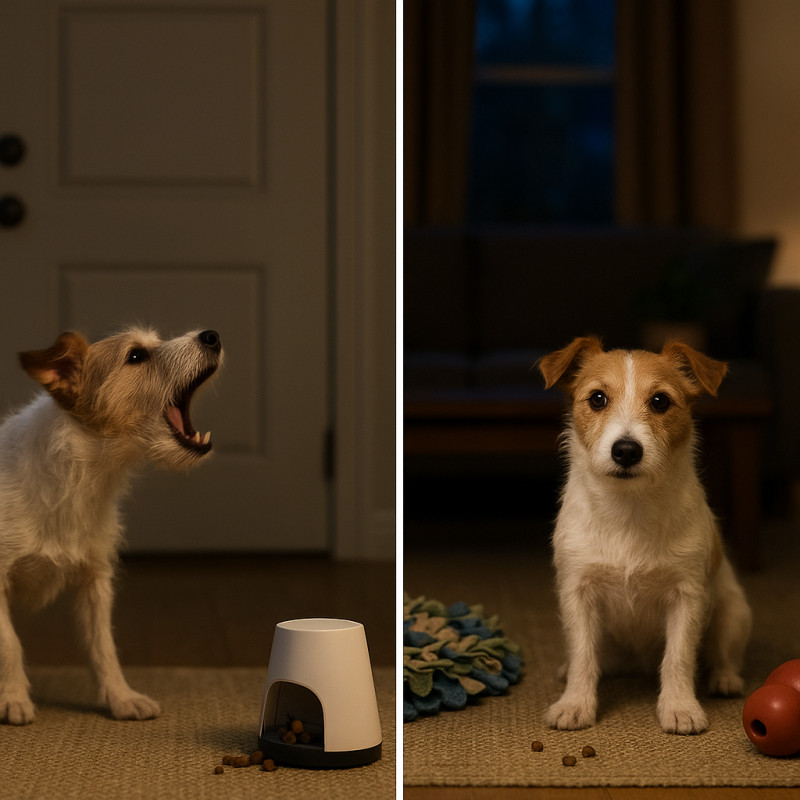
Reinforce calm and behaviors that can’t happen at the same time as barking, like lying on a mat, checking in, or carrying a toy. Start by rewarding tiny moments of quiet and gradually require longer quiet before a treat. Use automated dispensers or a helper so rewards are immediate during real triggers.
Practical training blueprints
For door/alert barking: teach a reliable "go-to-mat" and pair low-volume doorbell sounds with a rapid stream of treats on the mat. For fear or leash reactivity: work at a distance below threshold, mark a look or check-in, and feed, using U-turns and high-rate reinforcement to keep the dog safe and learning. For attention barking: remove the payoff (no eye contact, no talking) and reward brief pauses and an alternative cue like "mat." For separation barking: build tiny, gradual absences with good chews and consider vet-prescribed meds when anxiety prevents learning. For noise aversion: use sound desensitization at very low volume plus management; ask your vet about dexmedetomidine gel for acute events.
Simple daily routines you can try
Start small and be consistent: 10–20 minutes of sniff walks, two 10–15 minute enrichment sessions, and short training reps (5–10 minutes) focused on calm stationing. During known trigger times (mail, school bells), move your dog to a quiet zone with enrichment and sound masking. Keep sessions short and end while your dog is relaxed so they succeed often.
Tech tools that help (without punishment)
- Remote treat dispensers/cameras (Furbo, Petcube Bites, Pet Tutor) to reward quiet during a trigger and to log bark alerts.
- Treat&Train or automated reward stations to teach reliable mat routines for door training.
- White-noise machines, fans, or calming music playlists to reduce outside sound triggers.
- Window film, room dividers, and pheromone diffusers (Adaptil) as low-risk adjuncts.

What not to use
Avoid shock, vibration, citronella, or ultrasonic anti-bark collars and any physical or loud confrontational corrections. Research links aversive tools to increased fear, stress, and risk of aggression, and they do not fix the emotion driving the barking. Reward-based plans improve welfare and have better long-term success.
Track progress and set goals
Use objective measures like barks per hour from camera alerts, longest quiet streak, and episode duration to track change. Set SMART goals (e.g., reduce evening window barks from 30 to under 10 in three weeks) and adjust criteria so your dog succeeds about 80% of the time. If there's no improvement after consistent work, reassess function, increase rewards, add distance, or seek professional help.
7-day Quiet Foundations plan (easy start)
Day 1–2: Install window film or curtains, set up white noise, prepare stuffed Kongs, and mark tiny quiet moments. Day 3–4: Teach "go-to-mat" with rapid treats and introduce low-volume door sounds in short reps. Day 5–7: Stage a helper knock at very low intensity while you reward from the mat; add an automated dispenser if helpful and log your bark counts.
When to call a pro
Seek a veterinarian or a board-certified veterinary behaviorist if your dog panics when alone, shows aggression, hurts themselves, or if barking comes with sudden behavior changes. Certified, force-free trainers and behaviorists can build a personalized plan that may include medication to help learning.
Final thoughts
Quieting excessive barking is about changing feelings, not silencing sound. With a vet check, clear function-based plans, consistent reward-based training, humane management, and helpful tech, you can reduce barking while keeping your dog happy and safe. Small, steady steps and tracking wins will get you the calm household you want.
Search our dog listings!
Back to pet blog