
Fresh Food vs Kibble: The Real Benefits, Risks, and Costs of Refrigerated Dog Diets
Search our dog listings!
Introduction
Fresh, gently cooked refrigerated dog diets have become popular, but are they better than kibble? This post breaks down what fresh food really offers, what it risks, and the costs and chores you should expect.
Dogs near Columbus

BABY
Mixed Breed
🇺🇸
Canal Winchester, Ohio
female, medium, adult
Mixed Breed
Canal Winchester, Ohio

AMBER
Labrador Retriever, Labradoodle
🇺🇸
New Albany, Ohio
female, medium, adult
Labrador Retriever, Labradoodle
New Albany, Ohio

MAY
Smooth Collie
🇺🇸
Dublin, Ohio
female, medium, young
Smooth Collie
Dublin, Ohio

FORREST
Mixed Breed
🇺🇸
Grove City, Ohio
male, medium, baby
Mixed Breed
Grove City, Ohio

GRACIE
Pomeranian
🇺🇸
New Albany, Ohio
female, small, adult
Pomeranian
New Albany, Ohio

MABLE MAE
Coonhound
🇺🇸
Grove City, Ohio
female, medium, young
Coonhound
Grove City, Ohio

GHOST
Australian Shepherd
🇺🇸
Grove City, Ohio
female, large, baby
Australian Shepherd
Grove City, Ohio

TRUCKER
Pomeranian, Mixed Breed
🇺🇸
Plain City, Ohio
male, small, adult
Pomeranian, Mixed Breed
Plain City, Ohio

YARN
Mixed Breed
🇺🇸
Canal Winchester, Ohio
female, medium, baby
Mixed Breed
Canal Winchester, Ohio

MAURICE
Mixed Breed
🇺🇸
Canal Winchester, Ohio
male, medium, baby
Mixed Breed
Canal Winchester, Ohio

CHIPPER
Mixed Breed
🇺🇸
Canal Winchester, Ohio
male, medium, baby
Mixed Breed
Canal Winchester, Ohio

KATRINA
Mixed Breed
🇺🇸
Canal Winchester, Ohio
female, medium, baby
Mixed Breed
Canal Winchester, Ohio

CATE BLANCHETT
Australian Shepherd
🇺🇸
Columbus, Ohio
female, large, young
Australian Shepherd
Columbus, Ohio

COILLIN
Collie
🇺🇸
Dublin, Ohio
male, medium, young
Collie
Dublin, Ohio

HOMER
Mixed Breed
🇺🇸
Canal Winchester, Ohio
male, medium, baby
Mixed Breed
Canal Winchester, Ohio

OWEN
Yorkshire Terrier
🇺🇸
Plain City, Ohio
male, small, baby
Yorkshire Terrier
Plain City, Ohio

CORALINE
Great Pyrenees, Labrador Retriever
🇺🇸
Columbus, Ohio
female, large, adult
Great Pyrenees, Labrador Retriever
Columbus, Ohio

TROMBONE
French Bulldog
🇺🇸
Columbus, Ohio
male, small, young
French Bulldog
Columbus, Ohio

MISS JACKSON
Mixed Breed
🇺🇸
Canal Winchester, Ohio
female, small, baby
Mixed Breed
Canal Winchester, Ohio

GIDGET
Mixed Breed
🇺🇸
Plain City, Ohio
female, medium, baby
Mixed Breed
Plain City, Ohio
What "fresh" and "kibble" mean
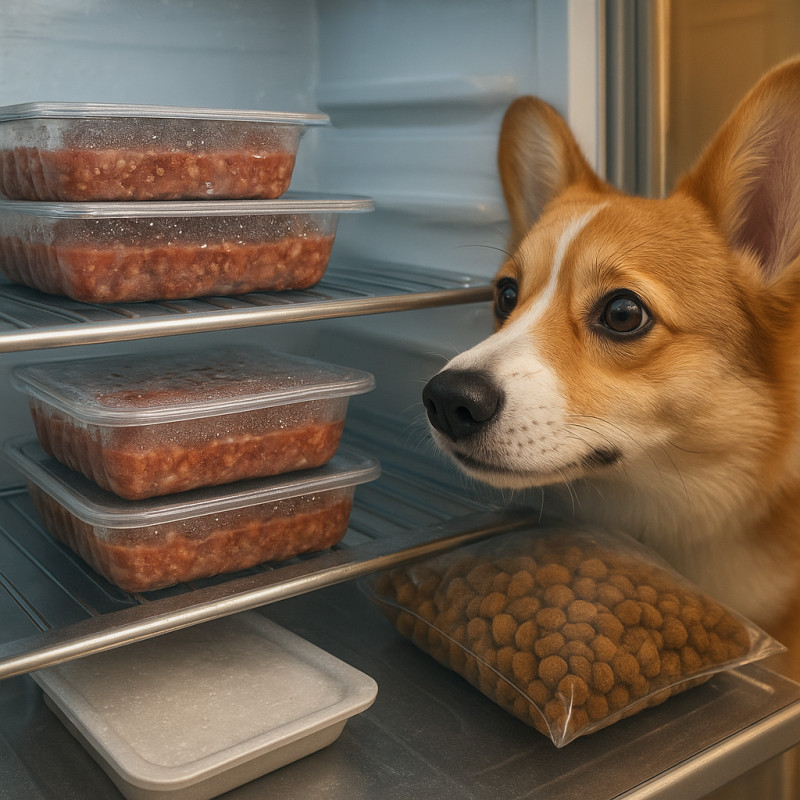
Kibble is extruded dry food with low moisture and long shelf life. Refrigerated fresh diets are cooked at lower temperatures, sold chilled or frozen, and have much higher water content.
Nutrition: completeness matters most
Format doesn't decide if a food is healthy; the label does. Look for an AAFCO or FEDIAF nutritional adequacy statement that says the food is "complete and balanced" for your dog's life stage.
Why fresh foods can help
Fresh diets are often more palatable and easier to get picky or sick dogs to eat. Their high moisture lowers energy density, so dogs often feel fuller on fewer calories, which helps weight control when portions are measured.
Digestibility, stools, and palatability
Many fresh recipes show high digestibility and can lead to smaller, firmer stools compared with some kibbles. That said, there is wide variation between brands, and some kibbles are highly digestible too.
Processing differences and chemistry
Kibble is made by extrusion at high heat and pressure, which boosts shelf life but can create heat-derived compounds like Maillard reaction products. Fresh, gently cooked foods usually have fewer of those compounds, but all cooking changes nutrients to some extent.
Food safety and handling
Gently cooked fresh diets are safer than raw, but they still carry a nonzero microbial risk because of chilling and post-cook contamination hazards. Follow FDA safe-handling advice: keep chilled products at or below 4°C (40°F), thaw in the fridge, use within the labeled window, wash hands and bowls, and avoid cross-contact with human ready-to-eat foods. For more, see FDA safe handling tips.
Recalls, QA, and what to ask a brand
Refrigerated products have had recalls for Salmonella or Listeria, so pick companies with strong quality control. Ask if a board-certified veterinary nutritionist formulates the diets, request full nutrient profiles and kcal per package, and check the company's recall history and test-and-hold programs.
Cost and convenience
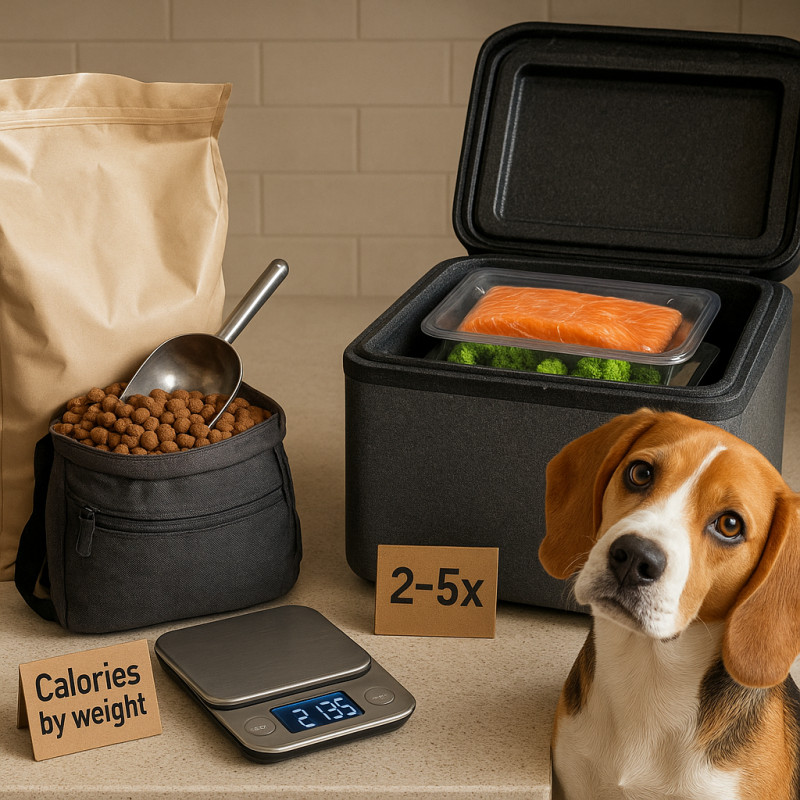
Kibble is usually far cheaper per 1,000 kcal and is easy to store and travel with. Fresh diets commonly cost about 2–5 times more per calorie and need fridge/freezer space and regular cold shipments.
Practical feeding tips
- Confirm the food is labeled complete and balanced for your dog’s life stage.
- Calculate daily kcal from ideal body weight and feed by calories, not cups.
- Transition slowly over 5–10 days to reduce GI upset.
- Weigh portions with a kitchen scale and track body condition every 2–4 weeks.
Hygiene and households with risk
If someone in the home is immunocompromised, be extra careful when handling chilled pet foods. Always follow fridge storage times on the label, clean surfaces, and discard opened product after the recommended window.
Dental health and treats
Don't expect better teeth just because a dog eats kibble. Only products accepted by the Veterinary Oral Health Council (VOHC) have evidence for reducing plaque or tartar. Regular toothbrushing and VOHC-approved products are the best ways to protect dental health.
When fresh may be worth it
Fresh food is a good fit when palatability, medication delivery, stool quality, or moisture content are priorities and the owner is ready for the higher cost and handling chores. It can be especially helpful for picky eaters, dogs recovering from illness, or overweight dogs when portions are carefully controlled.
When kibble may be better
Kibble often wins for cost, shelf stability, travel, and simpler storage. A well-formulated kibble from a reputable company with good QA can be nutritionally equivalent to a fresh diet and more practical for many families.
Environment and ingredient choices
High-meat, high-moisture diets generally have a larger environmental footprint per calorie than dry kibble. If sustainability is important, ask about ingredient sourcing or consider mixing formats to reduce waste and emissions.
Bottom line
The biggest health factor is whether the food is complete, balanced, and produced with good quality control. Fresh refrigerated diets offer real benefits in palatability, moisture, and often stool quality, but they cost more and need careful handling. A good kibble remains a solid, economical choice for many dogs.
Where to learn more
For deeper reading, check resources on how manufacturers prove nutritional adequacy and on safe handling practices. Your veterinarian can help compare kcal needs and pick a brand with transparent nutrient data and strong QA.
Search our dog listings!
Back to dog blog