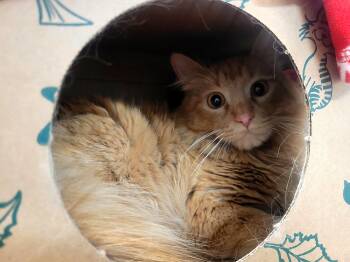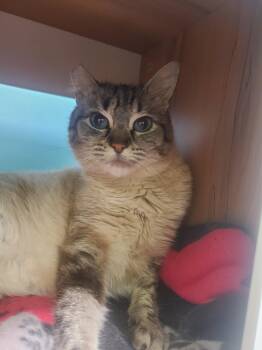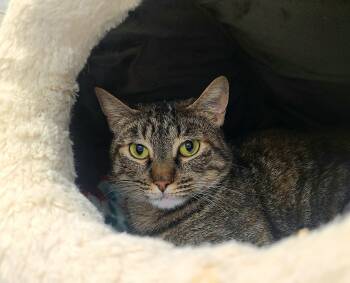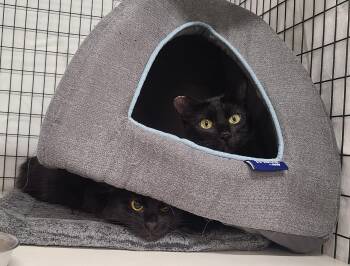
Tostone
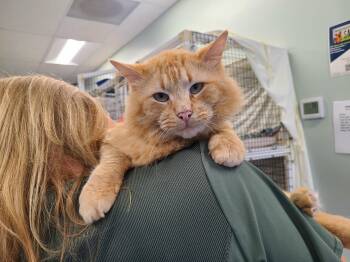
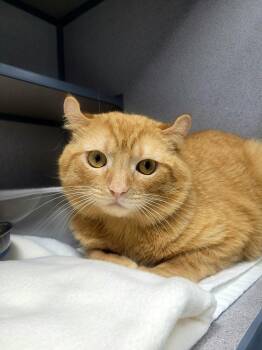
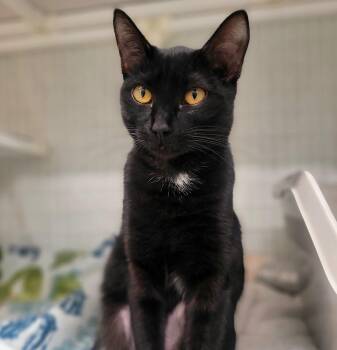
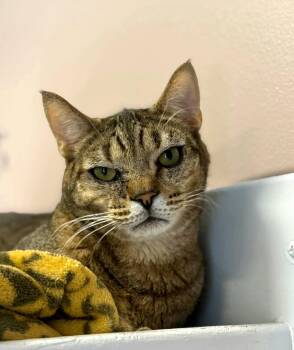
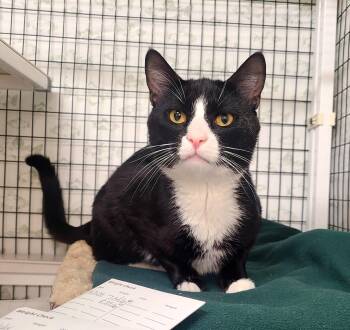
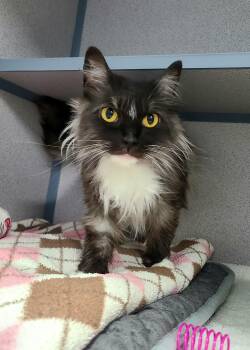
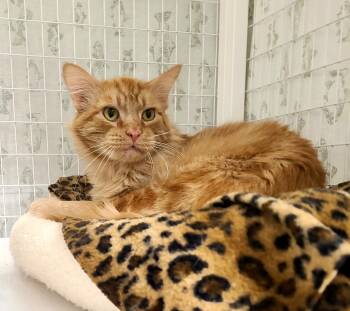
Tostone is a 4-year old male domestic medium hair orange/red tabby. He's awfully cute!
Tostone was found living in a feral colony, but ... he was anything but feral! A rescuer spotted him and brought him to safety. She fostered him for a period of time and found him to be friendly and curious. He got along well with the feral cats that he was living with to will most likely do well with another cat as long as introductions are slow and gradual. He will also do well as an only cat. He really likes laps.
Tostone has been neutered, vaccinated, dewormed, microchipped and viral tested.
Tostone is FIV+. We now know that FIV+ cats can live long and healthy lives as long as they are indoor only and receive regular vet visits. Also, they can safely and healthfully cohabitate with non-FIV+ cats. Please read more:
What is FIV?
FIV, or Feline Immunodeficiency Virus, has been compared to human HIV/AIDS. Like a person with HIV, a cat can be infected with FIV and enjoy good quality of life for quite some time. There is no cure for FIV, and cats with this disease are vulnerable to a number of secondary infections due to a suppressed immune system, especially if they are allowed outdoors where they are exposed to more things. However, most indoor-only FIV positive cats live normal life spans.
Who gets FIV?
FIV is not contagious to any other species and infected cats do not pose a risk for HIV infection in humans. Although it can affect cats of any age or sex, this disease is most commonly seen in intact adult male cats.
How is FIV spread?
FIV is not very readily spread. The main route of transmission is through bites, rarely through casual contact, and cats may cohabitate for years without transmitting the disease. However, bites are more likely to occur when a cat is newly introduced into a group. Introduction of an FIV positive cat to a household with FIV negative cats (or vice versa) therefore poses a moderate risk of disease transmission. Individually housed infected cats in a shelter do not pose an infectious risk to the shelter population. Although transmission to kittens at or near the time of birth has been experimentally reported, in nature this appears to be extremely uncommon. Kittens born to FIV positive mothers are at low risk for infection, although they may initially test positive due to the presence of maternal antibodies. FIV is not very durable in the environment. It is inactivated by most commonly used disinfectants. It can survive for up to 48 hours in a moist environment at room temperature.
________________________________________
How is FIV Diagnosed?
Blood tests are available for screening for FIV in-house or at most labs. The most commonly used test is the ELISA test, which looks for viral antibodies in the blood.
How accurate is the test?
The blood test is quite accurate, but false positives and occasionally false negatives do occur. In healthy, low-risk populations FIV is quite uncommon, and this leads to an increase in the relative number of false positive results. The blood test may also falsely identify recently infected cats as negative. To be absolutely certain, cats must be tested 1-3 months after their last known exposure. The test can not be accurately interpreted in young kittens.
There is currently no test available to distinguish between infected cats and cats that have been vaccinated for FIV.
What additional tests are available?
If resources allow, cats testing positive by the ELISA test should be retested by sending the appropriate sample to a laboratory for IFA or western blot analysis. At the very least, the ELISA test should be repeated to ensure that correct technique was used.
________________________________________
What is the prognosis for cats with FIV?
Cats with FIV can live for many years without symptoms. Some infected cats will develop secondary conditions such as oral disease and can be more susceptible to secondary infections, especially if they are allowed outdoors. However, indoor-only cats usually avoid most secondary infection because they are exposed to less. Only a very few FIV positive cats go on to develop full blown AIDS. Most indoor-only, FIV positive cats will live normal life spans, though they may need dental cleaning more often than an FIV negative cat. In general, treatment consists of good nourishment, protection from stress and infectious disease, and management of secondary conditions. There is no cure for FIV infection, though the efficacy of various antiviral agents in treating the disease is an area of active research.
________________________________________
What about vaccination?
There is a vaccine available for FIV, although the efficacy rate of the vaccine has been reported to be 67-84%. FIV vaccinated cats will test positive for FIV on all currently available tests. Therefore, permanent identification of vaccinated cats such as tattooing and/or microchip is vital. Because FIV is not very readily spread, the routine use of FIV vaccination in a shelter is rarely indicated. Rather, the new owner and their veterinarian should decide whether the vaccine is appropriate for the individual circumstances of the cat.
It is estimated that 2% - 25% of the global domestic cat population is infected with the virus. Many shelters across the United States routinely euthanize cats that test positive for FIV after their mandatory holding period. At this time the UC Davis shelter medicine program recommends that only owners of "at risk cats" (indoor/outdoor or outdoor only) consider vaccinating their cats for FIV, and if vaccination is elected, it is imperative that microchipping be performed at the same time. Having the means to quickly identify the owner of a stray cat entering a shelter with a positive FIV status can mean the difference between life and death.
***
We are currently conducting in person adoptions on Wednesdays, Thursdays, Fridays, Saturdays and Sundays from 1-5pm (walk-ins welcome, but appointments prioritized). To reserve an appointment to adopt, please complete an application by visiting www.MeowCatRescue.org/adopt and submit to adopt@meowcatrescue.org
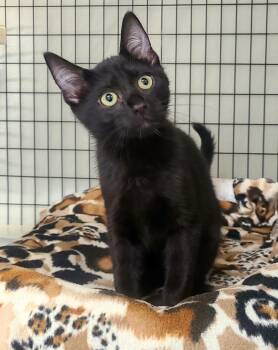
HARLEY QUINN & PUDDIN'
Domestic Short Hair
🇺🇸
Kirkland, Washington
male, medium, baby
Domestic Short Hair
Kirkland, Washington