
Tough Toy Guide: Best Dog Toys for Aggressive Chewers
Search our dog listings!
If your dog chews like a little excavator, you need toys built for serious jaws. This guide explains what materials and designs keep dogs safe, the top toy picks, what to avoid, and simple routines to make chewing safer and more fun.
Quick rules to remember
Start by choosing high-durometer natural rubber or reinforced nylon sized up for your dog.Never leave a power chewer unsupervised with a toy until you know how the toy holds up. Inspect toys before each session and replace them at the first sign of deep cuts, missing chunks, or exposed cores.
Use the fingernail test: if your thumbnail can’t make a tiny dent, the toy may be too hard and could increase the risk of a broken tooth.
Why rubber and reinforced nylon work (and when to avoid very hard chews)
Dense natural rubber gives a tiny bit of flex that spreads bite force and cuts down on tooth-fracture risk. Brands that engineer high-tear rubber are the most reliable for daily gnawing.Reinforced nylon chews can satisfy heavy gnawers but are very rigid. That rigidity can wear teeth or produce sharp pieces, so use nylon chews in rotation and watch them closely.
Avoid antlers, hooves, cooked bones, and any toy that fails the fingernail test. Veterinary dental groups see many broken teeth from those ultra-hard chews.
Top toy picks and why they stand out
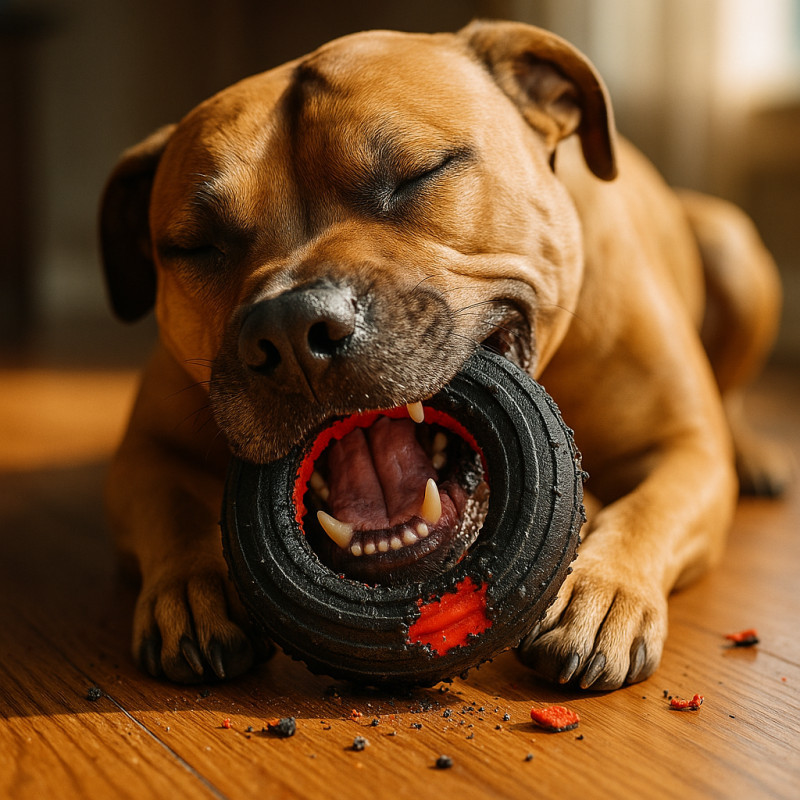
- Goughnuts Ring & Stick — Layered rubber with a contrasting safety core that shows when the outer layer is chewed through. Built for power chewers and backed by a lifetime guarantee.
What to avoid and why
Do not give antlers, hooves, cooked bones, or other extremely hard chews; they cause cracked teeth and oral injury. Avoid tennis balls for long chew sessions because the felt abrades enamel and the core breaks apart.Skip undersized toys and single-hole hollow balls that can create suction or be swallowed. Don’t let unsupervised aggressive chewers play with rope or plush toys that fray — string ingestion can be life-threatening.
Buying checklist and starter kit
- Material: high-durometer natural rubber or monitored reinforced nylon.
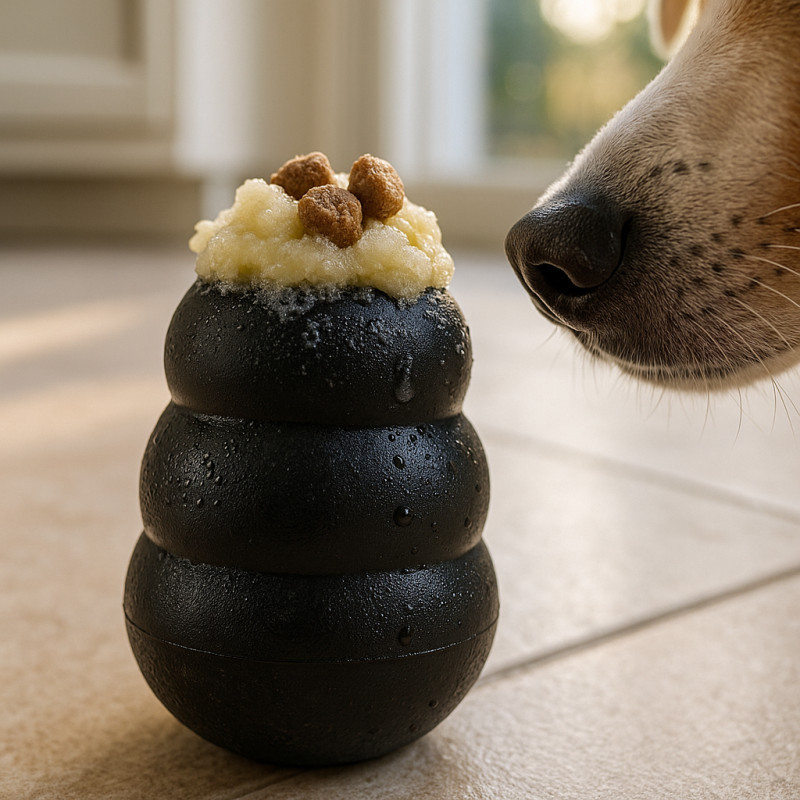
Starter kit idea: a Goughnuts Ring, a West Paw Jive ball (L/XL for medium-large dogs), a KONG Extreme for stuffing, and one monitored nylon chew to rotate in.
How to use toys to reduce destructive chewing
Rotate 3–5 toys so each one feels new and interesting. Offer a chew session after exercise to channel energy into an appropriate object instead of the couch.Use stuffable toys (KONG or Tux) filled with kibble, low-sodium broth, canned pumpkin, or banana and freeze for longer engagement. Teach a trade: cue a chew on a mat, reward calm chewing, and trade worn toys for fresh rewards.
Daily care, inspection, and replacement rules
Check toys before every session. Look for deep gouges, missing chunks, exposed cores, or sharp edges. Photograph wear monthly to see how fast a toy is degrading.Clean rubber stuffables in the dishwasher top rack if the toy label allows it. Rinse toys after use and wash nylon chews with hot, soapy water. Replace immediately when a safety indicator appears or when pieces could be swallowed.
Safety signs and emergencies
If you find blood on a toy or your dog starts chewing on one side more than the other, stop play and have a vet check the mouth. If your dog swallows a large piece, watch for vomiting, lethargy, or loss of appetite and contact your veterinarian right away.Final tips
No toy is truly indestructible, so supervision, inspection, and rotation are your best defenses. Invest in two durable rubber toys and one monitored nylon chew to lower replacement costs over time.Match chew hardness to your dog’s life stage: softer rubber for teething puppies and gentler options for seniors or dogs with dental work. With the right toys and a little routine, even the most aggressive chewer can have safe, satisfying fun.
Search our dog listings!
Back to pet blog