
How to prepare your home for a newly adopted rescue dog
Search our dog listings!
Before adoption day: dog-proof like a pro
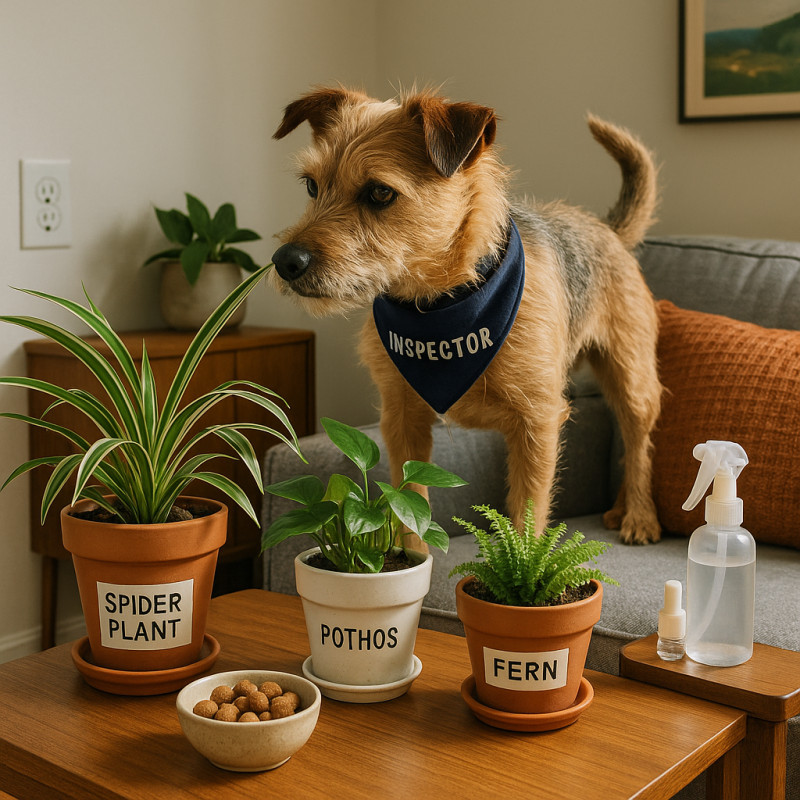
Think of your new dog like a curious toddler who explores with mouth and nose. Secure medicines, vitamins, cleaners, pesticides, and automotive fluids in high or locked places. Keep counters clear and use lidded trash cans to avoid tempting snacks.Check plants and foods around the house and yard. Many common items are dangerous to dogs (grapes, chocolate, xylitol, certain houseplants). For the full list, the ASPCA poison resources are a helpful reference.
Walk your yard at dog level and inspect fences. Fill gaps under gates, remove climbable objects, and make sure latches close securely. A fast escape can happen the first day if a gate is loose.
Set up a decompression zone
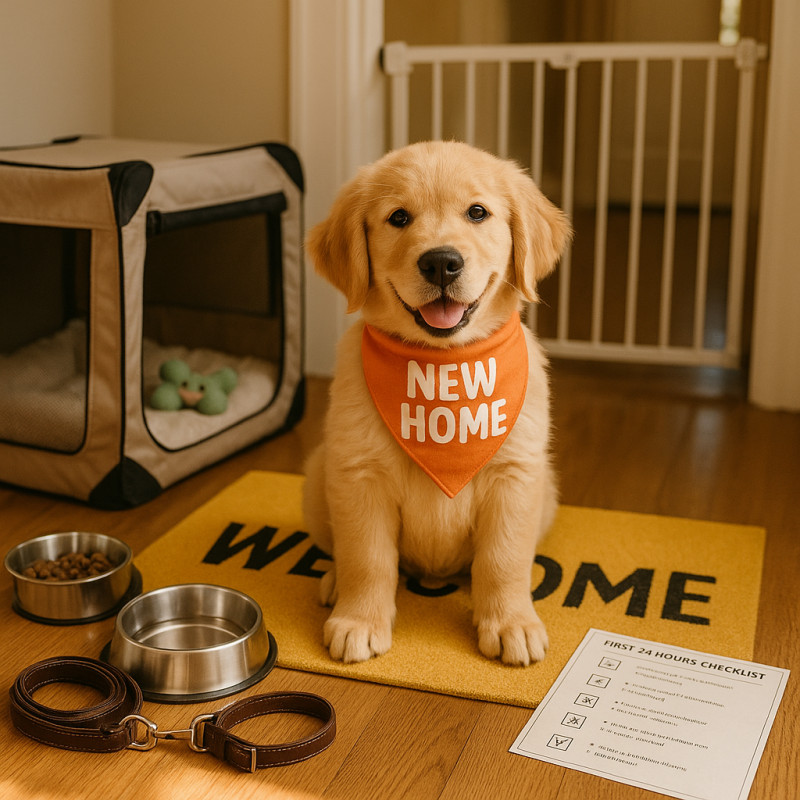
Pick a quiet room or corner where the dog can relax without lots of foot traffic. Equip it with a comfy bed or mat, fresh water, safe chews, and a crate or exercise pen if the dog tolerates one. Soft music or a white-noise machine can help buffer outside sounds.Keep this area available 24/7 during the first week so your dog has a safe harbor to retreat. Let the dog choose when to rest there and avoid forcing attention during downtime.
Must-have supplies checklist
- Flat collar with ID tags and a snug fit (two-finger rule).
- Well-fitted harness and a 6-ft leash (no retractables at first).
- Optional long line (15–30 ft) for supervised sniffing in safe areas.
- High-value soft treats, treat pouch, and food puzzle or snuffle mat.
- Durable chew toys, lick mat, feeding and water bowls, bed/mat.
- Enzymatic cleaner for accidents, poop bags, pet-safe wipes, and towels.
- Baby gates or exercise pen to manage access to rooms.
Family plan: agree before the dog arrives
Decide where the dog can go, feeding times, potty schedule, and basic cues (sit, leave it, mat). Post the plan on the fridge so everyone uses the same words and rules. Consistency from day one helps the dog learn faster and feel safer.Adoption day: calm travel and arrival
Transport your new dog in a secured crate or crash-tested harness. Keep the ride calm and go straight home—skip extra stops or parties. Bring a towel or blanket with any familiar scent and be ready to put the dog in the decompression zone on arrival.Take the dog outside for a potty break right away and reward elimination with a treat and calm praise. Let the dog explore the house gradually on-leash, then return to the safe space for rest.
The first week: routines, low arousal, and gentle training
Introduce a predictable daily routine: wake–potty–meal–short walk–rest–training/enrichment–rest. Predictability reduces anxiety and speeds learning. Keep walks short, sniff-focused, and quiet; avoid dog parks and crowded places.Start very short training sessions (1–3 minutes) using soft treats. Teach name response, a hand-touch, a settle-on-mat cue, and “drop/leave it.” Always end sessions on success to build confidence.
Begin short alone-time practice from day one. Leave for a few seconds and come back, gradually increasing time while the dog chews a safe food puzzle. Use a camera if you can to monitor behavior and avoid inadvertently creating separation panic.
Introducing kids and other pets
Make introductions slow and calm. Teach kids to let the dog come to them, to pet gently, and to avoid hugging or hovering. Supervise every interaction and keep the first meetings brief.For resident pets, start with scent swapping and short, neutral meetings. Use parallel walks and short on-leash encounters to reduce tension. Feed and rest pets separately at first to prevent resource guarding.
Vet care, ID, and parasite prevention
Schedule a vet exam within 1–2 weeks. Bring medical records and a stool sample if available. Confirm or scan the microchip and update registration, and start or confirm parasite prevention as advised by your vet.Use layered ID: a snug collar with tags and a registered microchip. Keep recent photos and microchip details handy on your phone in case of escape.
Weeks 2–4: expand freedom and skills slowly
Give more access room-by-room as the dog reliably rests and follows simple rules. Continue gates or pens when unsupervised to prevent bad habits. Build loose-leash skills with frequent short practice and reward good position.Add low-key social exposure—quiet parking-lot sits, gentle car rides, or short visits to calm places. Keep new experiences positive and stop if the dog shows stress signals.
Common pitfalls and quick solutions
Too much freedom too soon causes problems—use gates and earn access. Avoid punishment for accidents; instead, clean enzymatically and reinforce outdoor toileting. If the dog growls, give space and consult a positive-reinforcement trainer rather than forcing interaction.Quick 72-hour micro-plan
Day 0: secure transport, straight home, potty, decompression zone, short sniffy walk, small meal, early bedtime.Day 1: set schedule, 3–5 short training snippets, enrichment feeding, practice 2–3 brief alone-times with a camera.
Day 2–3: add mat training, expand supervised rooms, start long-line sniff walks, book vet visit if not done.
Quick-room checklist
- Entryway: gate or tether zone, hooks for leashes, calm greeting treats.
- Kitchen: latched trash, no food on counters, feeding station out of traffic.
- Living room: hide cords, pick up small items, block tempting window perches if needed.
- Yard: fix fence gaps, remove hazards, set a potty zone, lock chemicals in sheds.
Where to get more help
If you encounter persistent fear, aggression, or separation problems, reach out early to a credentialed, positive-reinforcement trainer (CPDT-KA, IAABC) and your vet. Prompt professional help keeps both the dog and your family safe.Bringing a rescue dog home is a journey of patience and kindness. With safety checks, calm routines, and lots of gentle rewards, your new dog can settle in and become a happy member of the family.
Search our dog listings!
Back to pet blog