
Subscription vs Shelf: Are Fresh Cat Food Services Like Smalls Really Better for Your Cat and Your Wallet?
Search our cat listings!
Intro: the question many cat owners ask
If you scroll pet food ads, you’ll see tasty fresh meals and shelf-stable cans competing for attention. It’s easy to wonder whether a subscription service like Smalls is actually healthier for your cat or just more expensive. This post breaks down the facts in plain language so you can choose what fits your cat and your budget.
Cats near Columbus

TAWNY
Domestic Short Hair, Affenpinscher
🇺🇸
Powell, Ohio
female, small, baby
Domestic Short Hair, Affenpinscher
Powell, Ohio

GENIE
Domestic Short Hair
🇺🇸
Columbus, Ohio
female, small, baby
Domestic Short Hair
Columbus, Ohio

BURRITO
Domestic Short Hair
🇺🇸
Ashville, Ohio
male, medium, baby
Domestic Short Hair
Ashville, Ohio

ANDY BERNARD
Domestic Short Hair
🇺🇸
Powell, Ohio
male, small, baby
Domestic Short Hair
Powell, Ohio

WINNIE
Domestic Short Hair
🇺🇸
Plain City, Ohio
female, medium, young
Domestic Short Hair
Plain City, Ohio

LOGAN
Domestic Short Hair
🇺🇸
Columbus, Ohio
male, medium, adult
Domestic Short Hair
Columbus, Ohio

MIA
Domestic Short Hair
🇺🇸
Hilliard, Ohio
female, medium, adult
Domestic Short Hair
Hilliard, Ohio

LEONARD
Domestic Short Hair
🇺🇸
Hilliard, Ohio
male, medium, adult
Domestic Short Hair
Hilliard, Ohio

SNOWBELL (KITTY)
Domestic Short Hair
🇺🇸
Ashville, Ohio
female, medium, young
Domestic Short Hair
Ashville, Ohio

JELLYBEAN
Domestic Short Hair
🇺🇸
Columbus, Ohio
female, medium, baby
Domestic Short Hair
Columbus, Ohio
PIXIE (KITTY)
Domestic Short Hair
🇺🇸
Ashville, Ohio
female, medium, baby
Domestic Short Hair
Ashville, Ohio

WES BORLAND
Tabby
🇺🇸
Powell, Ohio
male, small, baby
Tabby
Powell, Ohio

XAVIA
Domestic Short Hair, Tabby
🇺🇸
Powell, Ohio
female, small, baby
Domestic Short Hair, Tabby
Powell, Ohio

VAUGHAN
Domestic Short Hair
🇺🇸
Powell, Ohio
male, small, baby
Domestic Short Hair
Powell, Ohio

BLIMEY LIMEY
Domestic Short Hair
🇺🇸
Powell, Ohio
female, small, baby
Domestic Short Hair
Powell, Ohio
ATHENA
Domestic Short Hair
🇺🇸
Columbus, Ohio
female, medium, young
Domestic Short Hair
Columbus, Ohio

VIDALIA
Domestic Short Hair
🇺🇸
Powell, Ohio
female, small, baby
Domestic Short Hair
Powell, Ohio

JOHN WICK
Tabby
🇺🇸
Powell, Ohio
male, small, baby
Tabby
Powell, Ohio

JOLIE
Tabby
🇺🇸
New Albany, Ohio
female, medium, baby
Tabby
New Albany, Ohio

PORSCHE
Domestic Medium Hair
🇺🇸
Columbus, Ohio
female, small, young
Domestic Medium Hair
Columbus, Ohio
What matters most for a cat’s diet
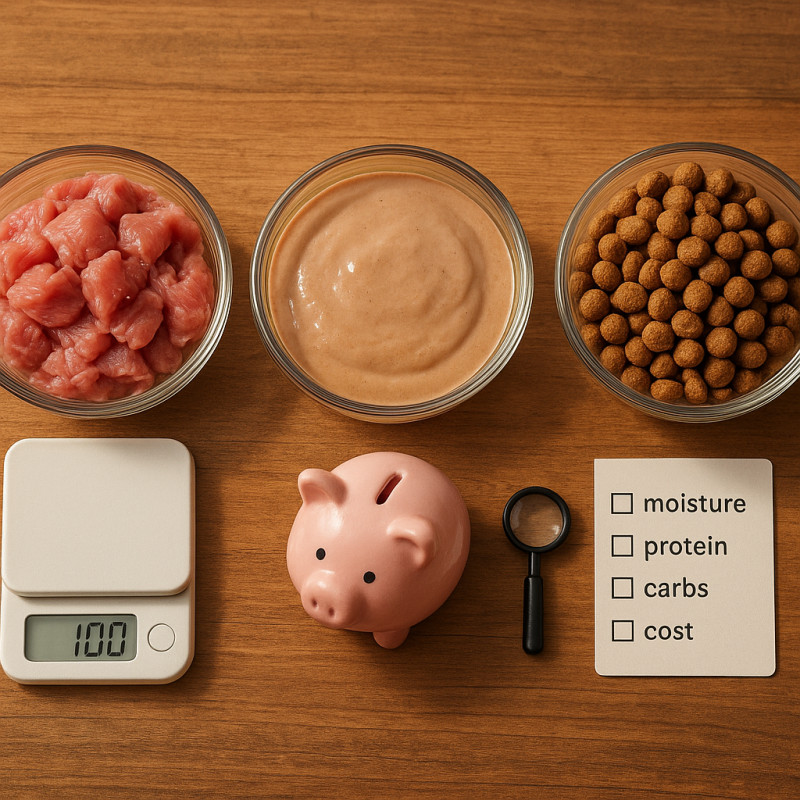
Cats are obligate carnivores, which means their bodies are built to eat animal-based foods. They need high-quality animal protein, certain vitamins and amino acids like taurine, and usually low digestible carbohydrates.
Moisture is also a top priority because many cats don’t drink enough water. Higher-moisture foods help dilute urine and lower the chance of urinary problems.
Finally, always check that a food is AAFCO “complete and balanced” for your cat’s life stage. That statement matters more than buzzwords like "human-grade." If it’s complete, the food meets minimum nutrient needs.
Fresh subscriptions vs canned vs kibble: the basics
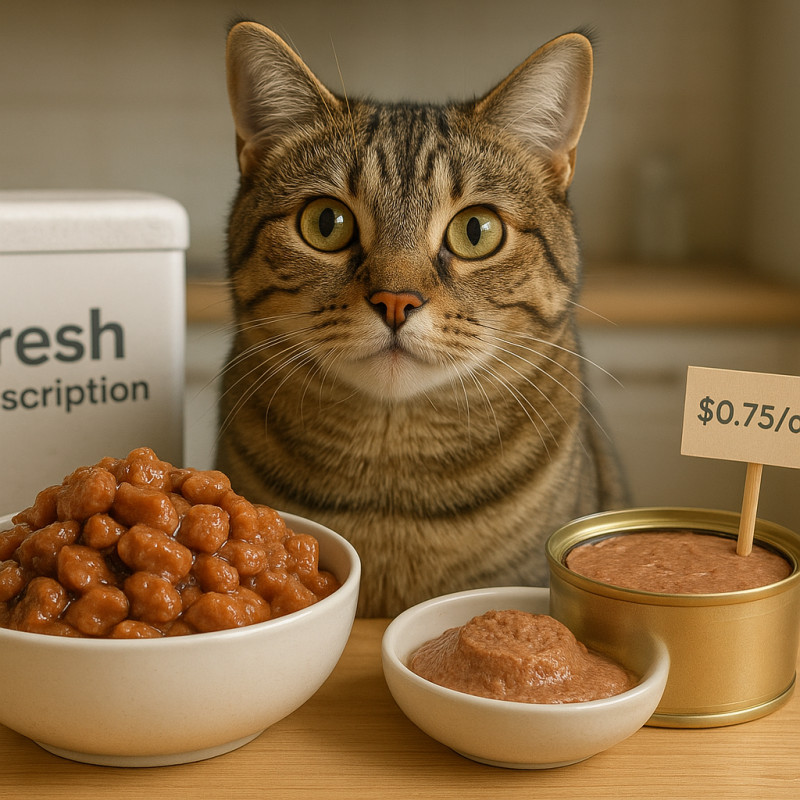
Fresh subscription meals (like Smalls) are gently cooked, refrigerated or frozen, and often marketed as human-grade. They usually have high moisture, high animal protein, and lower carbs than many kibbles.
Canned (wet) foods are shelf-stable and also high in moisture, often around 70–80%. Premium canned pâtés can match fresh diets for protein and low carbs.
Kibble (dry) has much less moisture and often more carbohydrates. It’s the cheapest option per calorie but may not be the best choice for cats prone to urinary disease, obesity, or diabetes.
Health benefits: where fresh helps — and where it doesn’t
The clearest health win for wet diets (fresh or canned) is moisture. More water in the diet dilutes urine, helping prevent crystals and some types of urinary blockages. That benefit is why vets often recommend wet food for urinary-prone cats.
Wet diets also tend to have lower calorie density per gram, which can help with weight control because cats feel fuller on less energy-dense meals. This works for both fresh and canned foods.
For diabetic cats, low-carbohydrate wet foods are often recommended because they help blood sugar control. Fresh services often offer low-starch recipes, but so do many canned formulas.
Claims that fresh is magically better for digestion or dental health are overstated. Fresh foods may be more digestible and produce smaller stools, but many premium canned foods do the same. And no diet replaces brushing; only VOHC-accepted products have proven dental benefit.
Safety: raw risks and handling
Raw diets carry higher pathogen risks like Salmonella and Listeria. Gently cooked fresh diets reduce this risk, but they must be kept cold and handled carefully. Check whether a brand publishes safety controls, batch testing, and recall history before buying.
All food formats can be recalled, so look up a brand’s track record and whether they are transparent about sourcing and safety procedures.
Cost: what to expect for your wallet
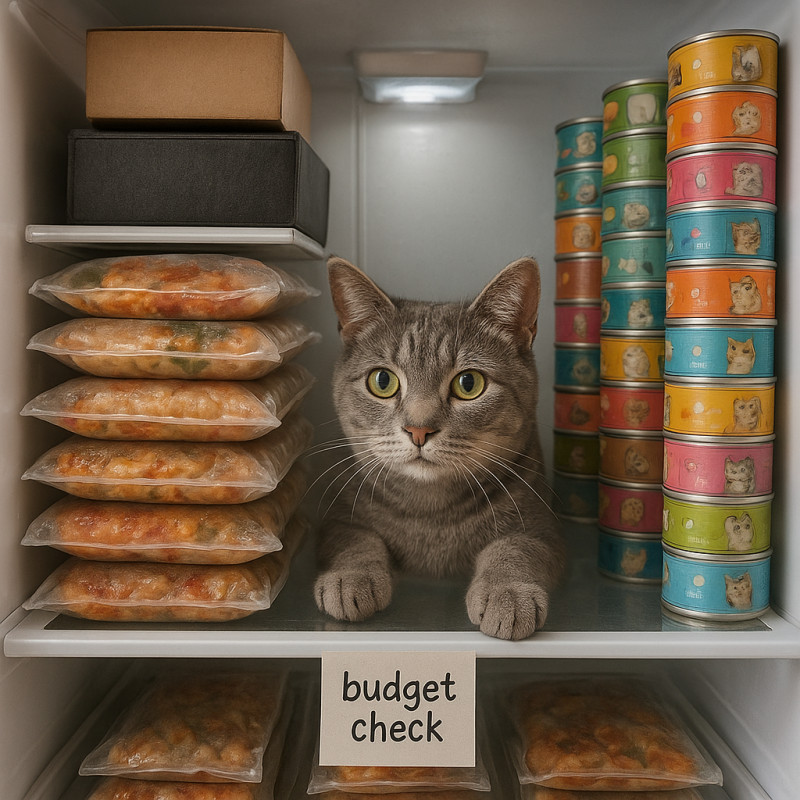
Money matters. For a typical 10 lb (4.5 kg) cat needing about 180–220 kcal/day, here’s a rough idea: kibble is usually the cheapest per day, canned wet is mid-range, and fresh subscriptions tend to be the most expensive per day.
Many fresh plans cost roughly $2–$4 per day for a 10 lb cat depending on recipe and discounts. Comparable canned diets often deliver the same moisture and macronutrient benefits for less money. If you want wet-feeding benefits but need to save, canned food is a strong, budget-friendly choice.
Practical checklist for choosing a fresh service
- Verify the AAFCO “complete and balanced” statement for the right life stage.
- Ask who formulated the diet (look for veterinary nutrition expertise).
- Request nutrient profiles and calorie density (as-fed and dry matter).
- Check safety steps: cooking temps, supplier verification, testing, and cold-chain logistics.
- Read recall history and transparency policies.
- Consider freezer/fridge space and how you’ll store and thaw meals.
- Plan a slow transition (7–14 days) to avoid upset stomachs or refusal.
Smart, budget-friendly feeding strategies
If you want the health wins without breaking the bank, consider a mostly wet approach using canned food as the foundation. Mix in fresh subscription meals for picky cat variety or as special meals if your budget allows.
Keep strict portion control and weigh or measure food. Monitor your cat’s body condition every 2–4 weeks and adjust calories. This prevents obesity, which is a major diet-related risk.
If your cat is diabetic or urinary-prone, prioritize low-carb, high-moisture diets and work with your veterinarian on any diet changes.
Other practical points
Fresh foods may produce smaller, less smelly stools and can be great for picky eaters or recovering cats. But they need fridge/freezer space and fast handling once opened.
There’s also an environmental angle: shipped fresh meals often use more packaging and transport, which can increase footprint compared with locally bought canned foods.
Bottom line: make health needs—not labels—the driver
Fresh subscription services like Smalls can be excellent: they often hit the key targets of high moisture, high animal protein, and low carbs, and many cats love the taste. But canned wet foods can usually provide the same health benefits at a lower cost.
Decide by asking: What health goals matter for my cat? What can I afford long-term? Do I have storage and time for fresh handling? Vet the product’s AAFCO status, nutrient info, and safety practices.
If budget is tight, choose a high-quality canned diet and focus on portion control and monitoring. If you value sourcing transparency or have a picky eater and can afford it, a fresh subscription can be a great choice. Either way, prioritize moisture and macronutrients over buzzwords.
Where to read more
For credible sources, check AAFCO for labeling rules, Tufts Vet Nutrition for wet vs dry explanations, AAFP guidelines for urinary disease, and FDA guidance on raw pet food risks. These resources can help you evaluate brands and make a safe, smart choice for your cat.
Search our cat listings!
Back to pet blog