
Out of Stock? Smart, Safe Short-Term Swaps When Your Cat’s Favorite Food Vanishes
Search our cat listings!
Introduction
When your cat's favorite food disappears from the shelf, it can feel stressful for both of you. Cats often refuse new foods, and not eating for more than 24 hours can be dangerous because of hepatic lipidosis. The good news is you can make a safe short-term swap by following a few simple rules. This guide will walk you through quick checks, portion math, transition plans, and red flags to watch.
First things to check right now
Look at the label and your cat's needs before you buy anything new. Make sure the substitute has an AAFCO statement saying it's complete and balanced for your cat's life stage (adult maintenance, growth, or all life stages). Note the food form (kibble, paté, shreds), primary protein, and kcal per unit so you can match calories. If your cat has a medical diet or a diagnosed allergy, call your vet before swapping.
Match form, protein, and calories
Cats are picky about texture and mouthfeel, so choose the same form if possible: paté to paté, shreds to shreds, wet to wet, dry to dry. Try to pick a product with the same main protein, especially if you suspect allergies. Always calculate portions by calories, not cups, because energy density varies a lot between brands. Use the kcal on the label to keep your cat's daily calories steady during the swap.
How to do the portion math
Find out how many kcal your cat currently eats per day and the kcal content of the new food. Example: if your cat eats 270 kcal/day from a can that is 180 kcal each, and the new can is 200 kcal, feed 270 divided by 200 = 1.35 cans per day. Measure food by weight with a kitchen scale for accuracy, because cups and spoon sizes are unreliable. Re-weigh and weigh your cat weekly to make small adjustments if weight drifts.
Transition schedules you can use
A slow transition helps avoid stomach upset and food refusal. Standard 7-day plan: Days 1-2 mix 75% old with 25% new, Days 3-4 50/50, Days 5-6 25/75, Day 7 fully new. For sensitive cats, extend each step to 2-3 days or 10-14 days total. If you're out of old food and need a faster change, start at 25-50% new and monitor appetite and stool closely.
Palatability tricks to keep your cat eating
If your cat is picky or losing interest, try warming wet food slightly to release aroma and make it more enticing. Add a little warm water, a teaspoon of low-sodium broth with no onion or garlic, or a small amount of tuna water or bonito flakes as a short-term topper. Keep all toppers and plain meats under 10% of daily calories so your cat's main diet stays balanced. Offer quiet, small meals in a comfortable spot and keep food bowls clean.
Special medical situations
If your cat has chronic kidney disease, diabetes, urinary crystals, pancreatitis, IBD, or is on a prescription therapeutic diet, talk with your veterinarian before changing foods. Therapeutic diets have specific nutrient targets like phosphorus, sodium, or carbohydrate that affect disease control. Never dilute a veterinary diet with an over-the-counter food without guidance because it can undo the diet's benefits. For confirmed food allergies, follow your vet's instructions and stick to the prescribed hydrolyzed or novel protein options.
Safe short-term toppers and what to avoid
Plain cooked meats or a little tuna can be used as toppers but keep them below 10% of daily calories. Avoid feeding dog food or unbalanced home-cooked meals as the main diet because cats need nutrients like taurine and vitamin A at specific levels. Do not switch to raw diets during shortages due to pathogen risks for pets and people. Avoid heavy fish-based diets long-term because raw fish can contain thiaminase and chronic fish feeding can increase heavy metal exposure.

Quality checks and recalls
Favor brands that are transparent about nutrition and use feeding trials or have qualified nutritionists. Before buying, scan the FDA recalls page for the brand and lot number to be safe. Check the AAFCO statement and calorie content on the label to make sure the product is suitable for your cat's life stage. Store dry food in its bag inside an airtight container and use opened wet food within 48-72 hours.
Build a backup bench
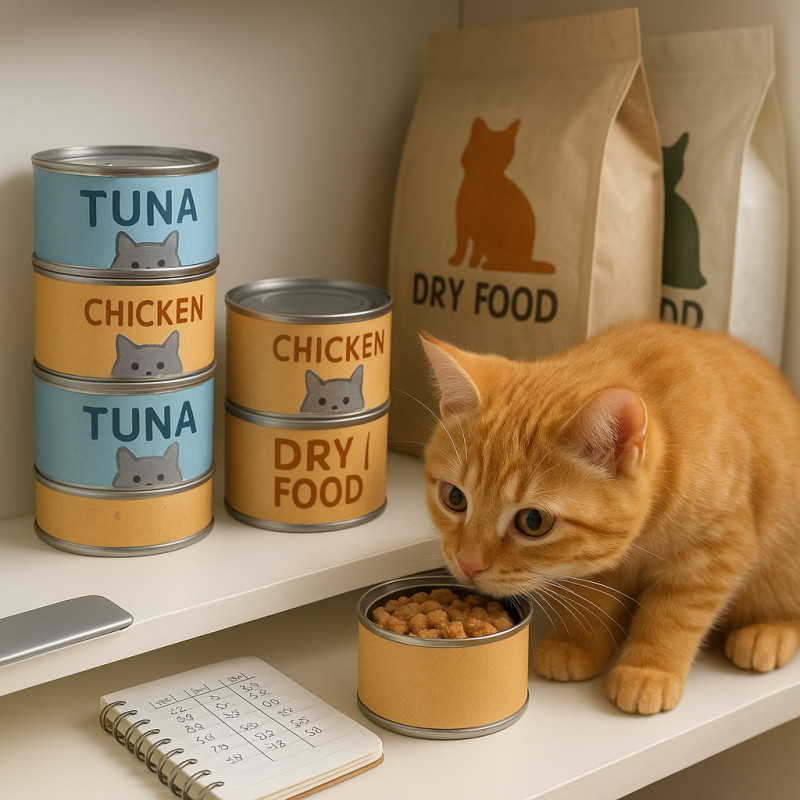
To avoid future panic, keep a two-to-four-week backup of 1-2 similar, well-tolerated alternatives. Rotate backups by feeding a small amount now and then so your cat keeps accepting them. Keep a written note of your cat's daily kcal intake, current weight, and the kcal per unit of your backups for fast portion math. This small habit saves time and stress during supply issues.
Monitor and when to call the vet
Watch appetite at each meal, stool quality, vomiting, water intake, urine output, activity, and weight for 7-14 days after a change. Mild soft stools for a day or two can be normal, but call your vet if vomiting or diarrhea lasts more than 24-48 hours, or if there is blood, severe lethargy, or refusal to eat approaching 24 hours. For diabetic cats, CKD patients, those on urinary diets, or allergy patients, consult your veterinarian before any swap.
Quick swap worksheet (do this now)
- Write down current food: brand/flavor, AAFCO life stage, kcal per unit, texture, main protein, daily grams and kcal.
- Find 2 substitutes that match life stage, texture, and protein; check AAFCO adequacy and kcal density; scan FDA recalls.
- Calculate new portions by kcal and measure by grams.
- Plan a 5-7 day mixing schedule (longer if sensitive) and prepare palatability aids.
- Log appetite, stool, vomiting, water, urine, activity, and weight for 7-14 days and call your vet for red flags.
Bottom line
When your cat's food is out of stock, pick a complete-and-balanced substitute for the same life stage, match texture and protein, keep total daily calories steady, and transition slowly when you can. Use palatability tricks to prevent a dangerous fast, and always contact your veterinarian for cats with medical needs. Building a small backup pantry and keeping simple records will make future shortages much easier to handle.
Search our cat listings!
Back to pet blog